
Conservation Tillage Facts
Farmer Resource
What is it?
It is a system of crop production with little, if any, tillage. It increases the residue from the crop that remains
in the field after harvest through planting. This results in increased natural recycling of crop residues.
- Used on 38% (109 million acres) of all U.S. cropland (293 million planted acres).
- Goal is 50% (146 million acres) of the planted cropland in the U.S. by 2004.
Where is the use of conservation tillage expected to increase?
- Conservation tillage soybean acres are expected to increase rapidly.
- Wheat and cotton acres will also increase significantly the next five years.
- Corn acres are expected to remain steady until technological and/or management research
helps farmers overcome challenges.
How does it help create better soil?
By leaving crop residue undisturbed for as long as possible, microbial and other biological activity
in the soil feeds on the stalks, leaves and other crop residues. This increases organic matter, improves
soil tilth and, ultimately increases soil productivity.
Why is soil quality important?
Better soil retains more moisture for dry periods, yet the improved structure speeds natural infiltration in wet spots.
- In the Great Plains, continuous no-till conserves 2-4″ of soil moisture annually when compared to intensive tillage systems.
- In other areas, it improves water infiltration after the soil reaches its maximum water holding capacity.
- The improved soil structure also reduces compaction enabling plant roots to be stronger, healthier.
Cleaner water
Soil erosion can be reduced by 90% (compared to intensive tillage). While we have long thought of
soil erosion as reducing top soil, we now know it’s one of the top ‘pollutants’ in America’s waters.
- Reducing soil erosion also reduces phosphorous and can reduce pesticide movement.
- Reductions in phosphorous result in reductions in algae and increase oxygen supplies for fish.
- Reduces risk of nutrient escape the soil by increasing nutrient availability and uptake by plant roots.
- Converts any escape of crop protection products into carbon and other basic components.
Can Conservation Tillage really provide “Greater Profits?”
Certainly, every situation, every manager and every growing season impacts profitability. The more risk
is reduced, the better the opportunity in increased profitability. The conservation tillage system reduces
labor, equipment costs, and fuel use, particularly when no-till, one type of conservation tillage, is used.
The bottom line? If a grower wants to make a conservation tillage system work and has the fortitude to
make the necessary changes in crop production management, it can provide greater profits.
- No-till soybean production normally increases profit per acre.
- No-till wheat improves rotation diversity providing more crop flexibility and greater profits over the entire rotation period.
- No-till cotton can also increase profit per acre. This will become more apparent as ginners improve their ability to gin stripper harvested cotton.
Categories

Sign up for our Newsletter
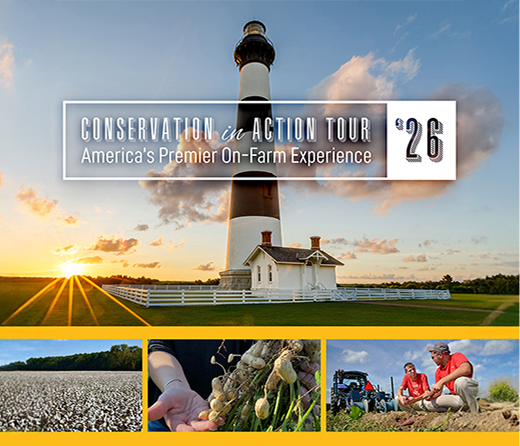
June 2026 | Raleigh, North Carolina
Conservation in Action Tour | America’s Premier On-Farm Experience
Related News

2026 National Cover Crop Report Shows Continued Expansion Of Cover Crop Use, Including Cover Crop Grazing, Use Of Drones, And Planting Patterns
Farmers with 10+ years of experience help provide insights into incentive program design, monetization, and management practices that drive returns on investment. INDIANAPOLIS — Results of the 2026 National Cover Crop Report released Sept. 1 at the Farm Progress Show indicate strong interest in cover crops among many farmers who produce a wide range of…

CTIC Board Chair Sets Priorities for 2026-2028 Term
Kellis Moss is one of the country’s leading public policy experts on wetland habitat. As Managing Director of Federal Affairs for Ducks Unlimited, he spends his days helping legislators, agencies, administrations, and partners understand policies that support wetland conservation and safeguard habitat for migratory waterfowl. Supporting conservation on private lands is a critical part of…

Share Your Conservation Story at the 20th Annual Conservation in Action Tour in Wisconsin
At the 19th annual Conservation in Action Tour in North Carolina, we heard from more than ten producers representing eight crops on topics like conservation practices in cotton to equipment modifications for a soil health system. As we plan our landmark 20th annual Conservation in Action Tour, we would love to continue hearing producers’ on-the-ground experience. To…